














.jpg?la=en&h=320&w=720&hash=244C75B74F0F77521D56164450973BCD)









.jpg?la=en&h=310&w=720&hash=8D9823F26AA80B2B75C3E4B2E61770DC)

.jpg?la=en&h=320&w=719&hash=13CA7E4AA3E453809B6726B561F2F4DD)
.jpg?la=en&h=306&w=720&hash=F21A7CD3C49EFBF4D41F00691D09AEAC)

.png?la=en&h=320&w=720&hash=18CFCCD916C92D922F600511FABD775D)














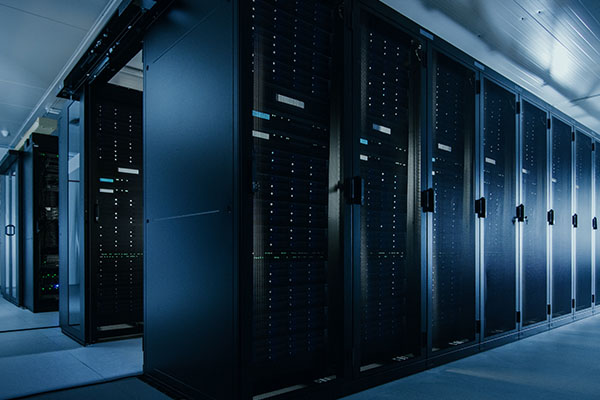

How AI is raising the stakes for data center load efficiency – are you ready ?
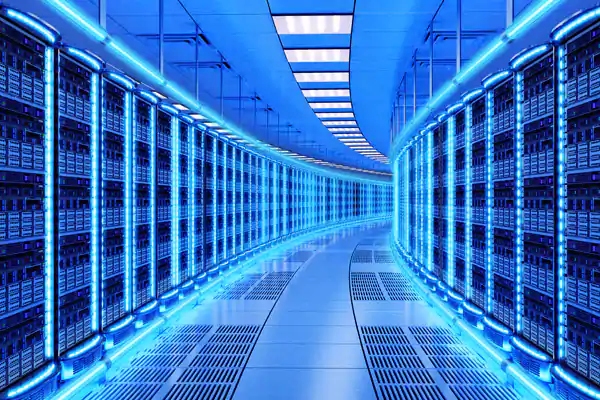
AI training centers build models with heavy, nonstop workloads, while inference centers run those models in real time for users, handling fast, unpredictable demands.


Key Takeaways
- Surging Energy Demands. The International Energy Agency (IEA) warns that data center electricity demand could more than double by the end of the decade.
- Rack Density is Skyrocketing. EPRI research shows rack density jumping from 8–40kW to 130–600kW, with projections of 1.2MW per rack by 2028
- AI Factories: Training vs. Inference. Inference centers handle real-time user interactions and must be geographically distributed to reduce latency.
Modernize and save
Advanced analytics
Understanding AI factories: Training vs. inference
Not all AI facilities are created equal. AI training data centers, true "AI factories for model creation", 1 run continuous, power-intensive workloads that push thermal systems to their limits. These facilities create the large language models (LLMs) that power AI applications.
AI inference data centers serve a different purpose. These "AI factories for deployment" 2 handle real-time user interactions – think of when you use Copilot or ChatGPT. They face unpredictable usage spikes while maintaining instant response times across global user bases.
-
Lorem ipsum Lorem ipsum dolor sit amet consectetur adipiscing elit quisque faucibus ex sapien vitae pellentesque sem placerat in id cursus mi pretium tellus duis convallis tempus.
33%$#
McKinsey projects AI-ready data center capacity will grow 33% annually through 2030
Graphics processing units (GPU) clusters are now consuming as much power as small cities, with some burning through 100 megawatt-hours just to train a single model. The AI boom is forcing data centers to face demands that traditional systems weren't designed to handle.
McKinsey projects AI-ready data center capacity will grow 33% annually through 2030. The International Energy Agency warns that data center electricity demand could more than double by decade's end. Recent EPRI research reveals an even more dramatic shift: rack density is jumping from 8-40kW to 130-600kW, with projections reaching 1.2MW per rack by 2028. As NVIDIA's Jensen Huang noted: "Your revenue is limited if your power is limited." the initiative and continued inefficiencies in surgical environments .
“The industry needs dynamic thermal management systems that adapt to variable AI loads in real time.”
Ruben Donin
Business Development Manager, Johnson Controls
The real challenge: heat and variability
This isn't about simply managing higher baseline consumption. It's about building systems that adapt in real time to workloads shifting from moderate to maximum intensity in milliseconds. Traditional cooling approaches designed for steady-state operations simply aren't equipped for this variability.
The sustainability stakes are equally high. McKinsey research suggests AI infrastructure growth could outpace decarbonization efforts, risking net zero targets. The IEA projects that by 2030, AI-optimized data centers could consume more electricity than the entire country of Japan does today.
Keep this info handy—download now to access it on the go.
-
Lorem ipsum Lorem ipsum dolor sit amet consectetur adipiscing elit quisque faucibus ex sapien vitae pellentesque sem placerat in id cursus mi pretium tellus duis convallis tempus.
The real challenge: heat and variability
“The industry is very good at understanding how we remove heat at a low and medium-density scenario,” says Davin S. Sandhu, Global Portfolio Director for Data Center Solutions, Johnson Controls. “But as rack density keeps increasing, that's when you start having to discuss and have a conversation on whether you have the right thermal management solutions in place.”
“And that's when it becomes incredibly important to have a partner who understands these different thermal management challenges and system demands, so that you're not only successful today, but you're prepared for the future.”
Organizations need partners who understand both technical complexities and strategic imperatives. The AI revolution is raising stakes for everyone in the data center ecosystem, but it's also opening extraordinary possibilities for smarter, more sustainable and efficient infrastructure.
The companies that figure out these complexities with the right technical expertise and strategic partners are the ones who will come out ahead. The question isn't whether we're ready - it's whether we'll choose solutions that can adapt, scale, and deliver tomorrow's performance requirements.
Ready to future-proof your AI infrastructure? Partner with Johnson Controls to navigate AI-ready data center complexity to maintain efficiency and sustainability.
Join the community!
Citations
1. Last Name, F.M.: Title of the Article (Year, Month Day). Website name. http://web address
2. Last Name, F.M.: Title of the Article (Year, Month Day). Website name. http://web address
Written by Joakim Weidemanis
Short description work title at Johnson Controls, Lorem ipsum dolor sit amet consectetur.Vitae at integer mi volutpat mauris morbi cursus.
- Lorem ipsum dolor sit amet consectetur adipiscing
- Elit quisque faucibus ex sapien vitae pellentesque sem placerat in id cursus
- Mi pretium tellus duis convallis tempus.
Security doesn’t sleep, but no one can stay vigilant for threats to your business around the clock.
Johnson Controls’ integrated security systems empower you to remotely monitor and control your buildings’ security, from video surveillance to alarm systems to user access and more.
Got questions? We’ve got answers.
Explore our FAQ section to find quick, helpful information about the Case Study, how to access it, and what to expect.
-
What is included in the Case Study?
A Case Study typically includes a detailed analysis of a specific project, product, or initiative to showcase its impact, process, and results. Here's what it usually contains:
Background or Context – An overview of the problem or opportunity that led to the project.
Objectives – What the solution aimed to achieve.
Approach or Methodology – Steps taken, strategies used, and products applied.
Results and Outcomes – Key metrics, improvements, or benefits realized.
Insights and Learnings – What was discovered or could be improved.
Next Steps or Recommendations – Suggestions for future actions or scalability. -
How to contact a rep?
Image Description: Lorem ipsum Lorem ipsum dolor sit amet consectetur adipiscing elit quisque faucibus ex sapien vitae pellentesque sem placerat in id cursus mi pretium tellus duis convallis tempus. -
What does Smart Ready means?
Image Description: Lorem ipsum Lorem ipsum dolor sit amet consectetur adipiscing elit quisque faucibus ex sapien vitae pellentesque sem placerat in id cursus mi pretium tellus duis convallis tempus.
Johnson Controls Showcases the Future of Sustainable Data Center Technology
Opened in April 2018 with an initial investment of $150 million, JADEC is the largest and most advanced test lab of its kind in the world.
Innovation and sustainability for data centers
In an interconnected world that is more “online” and “always-on” than ever before, data centers are the driving engine of innovation.
From submarines to servers: Todd Grabowski discusses meeting data center cooling demands on Bloomberg Radio
President of Data Center Solutions Todd Grabowski recently sat down with Bloomberg Radio's Money Minute to discuss innovations in
Why ABI Research named us a data center leader
Opened in April 2018 with an initial investment of $150 million, JADEC is the largest and most advanced test lab of its kind in the world.